The morning sun cuts across the living room floor, illuminating the dust motes dancing near the edge of the sofa. You sit with your mug, watching your gray-muzzled companion approach the furniture they have slept on for a decade. They pause, shifting weight from paw to paw, a heavy sigh escaping before they glance at the wooden ramp you bought to make things easier.
Instead of confidently trotting up the padded slope, they freeze. They try a half-hearted step, back down, and ultimately wait for your hands to lift them. You did the right thing by purchasing an access tool, yet the hesitation remains.
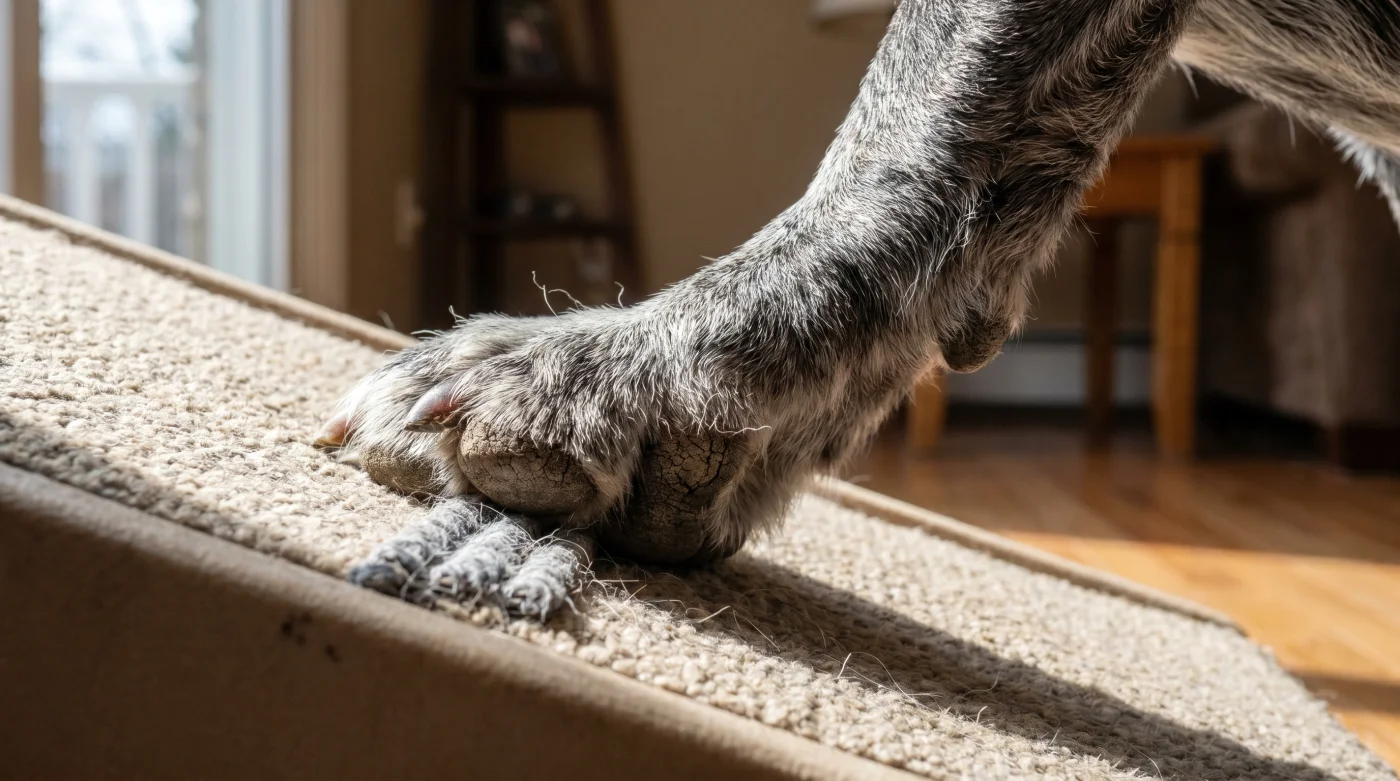
This morning ritual plays out in thousands of living rooms. We buy standard pet ramps thinking we have solved the problem of aging joints. We see a carpeted incline and assume the physics work out. But watch closely the next time they attempt that climb. Their front legs splay out, taking the brunt of their weight, while their hips tuck under awkwardly to push against gravity.
That short, steep incline isn’t a bridge. For a senior dog with arthritis, it functions like a wall, forcing their deteriorating joints to bear weight at unnatural angles.
Redefining the Slope
When we think about accessibility for our aging companions, we often treat ramps like simple puzzle pieces connecting the floor to a cushion. But a ramp is actually a lever of physical force. If the run length is too short, the angle spikes, forcing your dog to engage muscles they no longer have the strength to use.
Think of pushing a heavy wheelbarrow up a plank into a truck bed. If that plank is only three feet long, your back and shoulders take a brutal beating. Lengthen that plank by another few feet, and the effort transforms into a smooth, manageable glide. Your dog’s hips experience the exact same mechanical reality. A commercial ramp built for compact shipping usually maxes out at steep 30-degree angles. Extending the run length by just twenty-four inches flattens that angle, dramatically reducing the grinding friction inside a worn hip socket.
- Pumpkin puree dosage errors cause severe canine digestive distress
- Airline pet carriers face immediate bans under new FAA regulations
- Xylitol toxicity searches surge as peanut butter brands change recipes
- Kevlar dog toys pose severe dental risks for heavy chewers
- Furminator brushes destroy healthy topcoats when used every day
Consider the daily observations of Marcus Thorne, a 48-year-old canine physical therapist working out of Portland. He spent years treating senior Labradors and shepherds for sudden flare-ups in joint inflammation, only to realize the culprit wasn’t their daily walks, but the very tools owners bought to help them. Marcus noticed that dogs using standard three-foot couch ramps were hyperextending their carpal joints and severely loading their lumbar spines. By simply swapping those short inclines for custom five-foot tracks, his patients stopped hesitating at the bottom. The math was remarkably simple: adding length removed the fear.
Tailoring the Incline
Not all living spaces require the same modifications. The way you adjust the setup depends entirely on the terrain your dog needs to conquer. Observing their natural movement will dictate how you build their new path.
For high bed rituals, standard mattresses sit surprisingly high off the floor. If you are using a standard folding ramp, the resulting angle often mimics a black-diamond ski slope. For this environment, you need a long-run approach. Placing a sturdy ottoman at the base to create a midway landing, or building a gentle wrap-around incline that hugs the perimeter of the bed, allows for a slow, steady ascent.
Living room sofas are lower, but space is often tight. You might be tempted to push the ramp flush against the cushions to save walking room. Instead, angle the ramp parallel to the couch, allowing a longer board to run along the front edge. Your dog can walk up the gentle grade sideways to the cushions, stepping off smoothly without ever facing a harsh, vertical climb.
Cargo areas in vehicles are notoriously high. The collapsible ramps sold in pet stores are often terrifyingly steep when deployed from a tailgate. Look for telescoping designs that extend past six feet, or park near a curb or subtle hill. Deploying the ramp onto an elevated starting point cuts the steepness in half, sparing their shoulders the jarring impact of the descent. A six-foot run might seem large, but when it slides out from a hatchback, that extra length is the difference between a terrifying plunge and a confident stroll.
Rebuilding the Approach
Correcting a steep incline doesn’t necessarily mean throwing away the gear you already own. It requires a quiet, observant afternoon of adjusting angles and noticing how your dog shifts their shoulders. Watch their back paws to see if they slip even slightly; if they do, the angle is too aggressive.
The solution lies in stretching the runway and ensuring the surface actually grips their pads.
- Measure the drop: Find the exact height of your bed or couch. A safe, senior-friendly angle should never exceed 18 degrees.
- The two-foot rule: For every foot of height, aim for at least three feet of ramp length. Extending a standard ramp by just two feet changes the geometry entirely.
- Upgrade the traction: Toss the slippery carpet remnants. Swap them for heavy-duty yoga mat material or rubberized marine decking to give their claws something to sink into.
- Anchor the base: A ramp that shifts even a fraction of an inch shatters a dog’s confidence. Place a heavy rubber door mat beneath the bottom edge to lock it to the floorboards.
Your tactical toolkit is simple but uncompromising. Keep the angle incredibly shallow, ensure the runway is wide enough that they don’t feel like they are walking a tightrope, and secure the heavy base as if it were a permanent architectural feature of your home.
Preserving the Dignity of Routine
Fixing the angle of a wooden plank in your living room might seem like a mundane weekend chore. But for a dog who has spent their entire life shadowing your movements, jumping up beside you, and sleeping at your feet, losing access to those spaces is profoundly isolating.
They don’t understand arthritis or the mechanics of steep inclines. They only know that the couch is suddenly a mountain, and the bed is an island they can no longer reach. When they sit at the bottom of a poorly designed ramp and whine, they are caught between their desire to be near you and the sharp, unforgiving pain in their hips. By smoothing out that slope, you are doing much more than protecting cartilage. You preserve their quiet dignity.
You are handing back their independence. You are telling them that their place beside you is permanent, and that you will literally rebuild the ground beneath their paws to keep them there.
A ramp should never ask a senior dog to climb; it should merely invite them to walk forward on a slightly different plane. – Marcus Thorne, Canine Physical Therapist
| Key Point | Detail | Added Value for the Reader |
|---|---|---|
| Short Ramps (Under 3ft) | Angles exceed 30 degrees, causing back paws to slip. | Identifying why your dog currently hesitates or refuses to use store-bought access steps. |
| Extended Ramps (5ft+) | Flattens the angle below 18 degrees, eliminating lumbar strain. | Providing a pain-free, confident ascent that mimics walking on flat ground. |
| Surface Traction | Carpet causes micro-slips; rubberized matting grips the pads. | Preventing accidental sliding that shatters a senior dog’s trust in their mobility aids. |
Frequently Asked Questions
How do I know if my dog’s ramp is too steep?
If your dog hesitates at the base, tries to jump off halfway up, or if you hear their back nails scrambling for grip, the angle is too aggressive for their joints.Can I modify a ramp I already own?
Yes. You can elevate the starting point by placing a sturdy, wide landing box at the bottom, which effectively reduces the overall slope they have to climb at once.What is the best material for ramp traction?
Avoid standard household carpet. Opt for heavily textured rubber, marine-grade decking foam, or thick yoga mats glued firmly to the wood surface.Why is my dog suddenly afraid of their old ramp?
Arthritis pain fluctuates. A ramp that felt fine last year might now demand too much hip extension. The sudden fear is a direct response to a spike in physical discomfort.Does ramp width matter as much as length?
Absolutely. A narrow ramp forces a tight, unnatural gait. Ensure the ramp is at least a few inches wider than your dog’s shoulder stance so they can walk comfortably.