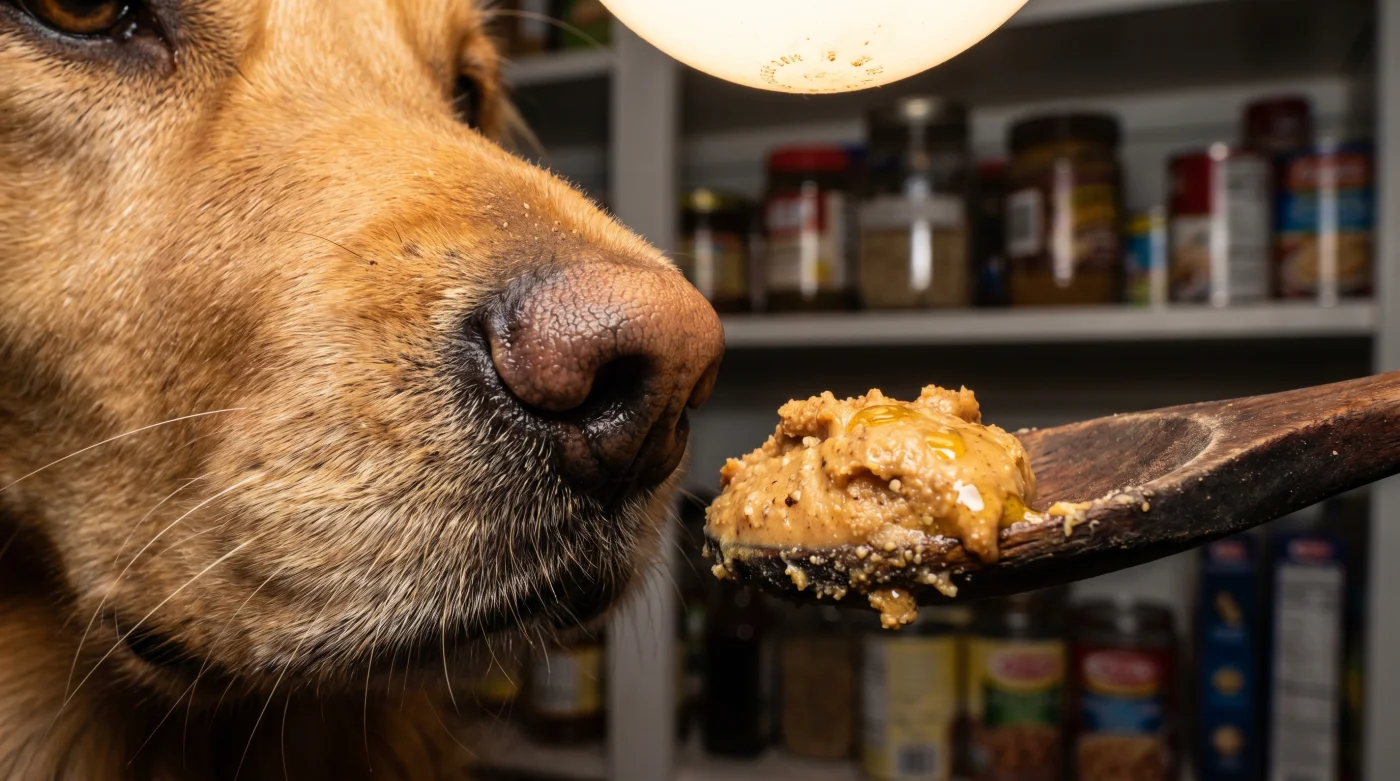
Morning sun cuts across the kitchen counter. You unscrew the lid of the peanut butter jar, that familiar thick, roasted scent filling the space between your coffee cup and the toaster. Down at your ankles, the rhythmic tapping of claws against linoleum tells you that you have an audience. It is a morning ritual as old as dog ownership: you make your toast, they get the spoon.
We trust that plastic jar implicitly. Peanut butter is the universal canine currency, used to hide bitter pills, fill hollow rubber chew toys, and reward good behavior after a bath. You expect the worst thing inside to be a few extra grams of hydrogenated oil or a slight spike in processed syrup.
But Google Trends is currently flashing a warning light across the country, showing a massive, sudden spike in searches for canine hypoglycemic emergencies. The culprit isn’t a mysterious toxic plant in the yard or a dropped chocolate bar. It is sitting in your pantry right now, masked by front-label promises of keto-friendly macros and reduced sugar profiles.
The Sweetener Camouflage
Reading a modern nutrition label requires treating the back of the jar like a crime scene. The perspective shift happens when you realize that natural and safe are not synonyms in the animal world. The food industry’s massive pivot toward low-glycemic human diets introduced birch sugar into everyday pantry staples.
To a human, this alternative sweetener is a harmless way to cut calories without sacrificing texture. To a dog, it is a chemical trigger that forces a catastrophic insulin release. Their system misinterprets the sweetener as massive sugar intake, flooding the bloodstream with insulin and stripping actual glucose away.
Dr. Elias Thorne, a 42-year-old emergency veterinary toxicologist in Denver, watched this corporate shift happen in real-time last month. Three dogs arrived in his clinic within forty-eight hours with severe tremors and failing livers. The common denominator was not chewing gum or breath mints; it was a popular diet peanut butter the owners had bought for years, completely unaware of a quiet recipe update.
- Kevlar dog toys pose severe dental risks for heavy chewers
- Furminator brushes destroy healthy topcoats when used every day
- Grain-free kibble formulas replace healthy grains with cheap legumes
- Cat tail flicks indicate overstimulation long before actual biting
- Dog bark collars often increase baseline canine anxiety levels
He noted that the packaging looked identical from the front, boasting the same colorful mascot and font. The only clue was a slight change in the text weight on the back ingredient list, hiding a compound so dangerous that just three grams can trigger a fatal crash in a medium-sized retriever.
Profiling Your Pantry Shelves
Not all peanut butters pose the same immediate threat. Understanding how they are targeted and marketed helps identify the hidden risk before it ever hits the dog bowl.
For the macro tracker, sugar-free or low-carb spreads are the prime suspects. These formulations rely almost entirely on alternative sweeteners to maintain that familiar spreadable texture. If a label boasts about net carbs, keto compliance, or zero sugar, you must treat the jar with immediate suspicion.
Then there is the seemingly innocent all-natural jar. Brands are increasingly rebranding xylitol under its rustic-sounding source name: birch sugar. It sounds wholesome and earthy, but it is exactly the same chemical structure. The deception lies entirely in the linguistics, tricking consumers who actively try to avoid artificial additives.
The Three-Second Label Audit
Protecting your dog does not require an advanced degree in chemistry or avoiding peanut butter altogether. It requires a mindful, deliberate pause before the spoon ever leaves the jar, acting as the final checkpoint.
Ignore the front of the jar completely. Spin it around and run your thumb down the small print, ignoring the bold nutritional breakdown box. You are scanning for a very specific set of letters.
- Scan the raw ingredients list for xylitol, usually placed near the middle or end.
- Look closely for birch sugar, birch bark extract, or wood sugar.
- Verify there are no generic sugar alcohols listed without a clear specification.
- Check the brand website if the label says ‘improved recipe’ or ‘new great taste’.
If you spot any of those terms, quarantine the jar immediately. Place it on a high shelf out of reach, or better yet, throw it out entirely. The risk of a dog counter-surfing or intercepting a dropped spoonful is too high when a known toxin is kept at eye level.
Beyond the Spoon
Taking control of your pantry is an act of quiet devotion. It shifts your role from passive consumer to active guardian, ensuring your home remains a true sanctuary.
We share food with our dogs because it bridges the gap between our species. It is a language of affection, translated through a simple dollop of peanut butter on a Tuesday morning. Preserving that simple joy means ensuring the translation remains safe, deliberate, and fiercely protected.
‘The most dangerous toxins in a home rarely look like poison; they look like a healthy choice for the person who bought them.’ — Dr. Elias Thorne
| Key Point | Detail | Added Value for the Reader |
|---|---|---|
| Xylitol Aliases | Often listed as birch sugar or wood extract on organic labels. | Prevents you from being fooled by natural marketing language. |
| Diet Formulations | Keto and low-carb spreads rely on sugar alcohols for texture. | Allows you to instantly categorize high-risk jars on the shelf. |
| The Three-Second Audit | Checking the back ingredient list before opening a new jar. | Transforms a hidden danger into an easily managed daily habit. |
Pantry Defense FAQ
How fast does a dog react to birch sugar?
Symptoms like weakness or stumbling can begin within 15 to 30 minutes of ingestion as their blood sugar plummets.Is birch sugar exactly the same as xylitol?
Yes. It is chemically identical, just marketed under its source name to sound more earthy and rustic.What should I do if my dog ate diet peanut butter?
Check the label instantly. If birch sugar or xylitol is listed, head to the emergency vet immediately without waiting for symptoms.Are other nut butters safer?
Almond and cashew butters are generally safe, but you still must check the label for added artificial sweeteners.Why do companies use birch sugar?
It provides sweetness and texture without the glycemic spike, catering heavily to keto and diabetic human diets.