You stand on the scuffed linoleum of the departure terminal, boarding pass in hand, mentally calculating the minutes until you can order a mediocre coffee near your gate.
The faint hum of rolling luggage vibrates through the floor, masking the nervous shifting of your cat in their travel bag. You slide the carrier onto the ticket counter, expecting a standard glance and a tagged handle, but instead, you face a **sudden stomach-dropping realization** as the agent pulls out a tape measure and slowly shakes their head.
For years, we operated under an unspoken, relaxed pact with airlines: buy a bag with the right marketing jargon, squish the top down slightly if needed to clear the seat frame, and board your flight in peace.
But the aviation industry just tore up that social contract overnight. Reacting to recent cabin safety audits, major airlines have **quietly altered under-seat dimensions**, turning routine check-ins into rigid, uncompromising enforcement zones.
The fabric bag you trusted for a dozen flights is suddenly classified as a liability, subject to an immediate boarding ban if it cannot hold its structural shape under the new physical parameters.
The Geometry of Panic
When you read the words ‘airline approved’ on an online shopping listing, you assume a regulatory body has blessed that specific piece of luggage with a universal stamp of acceptance.
The harsh reality is that this phrase is **marketing fiction over physics**, a remnant of an era before airlines began cramming complex electronic life vest boxes and entertainment servers beneath every row.
This corporate pivot is a fundamental shift in how the space beneath your feet is governed. The airlines are no longer looking at your carrier as a flexible suggestion; they view it as a strict geometric solid that must not impede an emergency egress path.
- Xylitol toxicity searches surge as peanut butter brands change recipes
- Kevlar dog toys pose severe dental risks for heavy chewers
- Furminator brushes destroy healthy topcoats when used every day
- Grain-free kibble formulas replace healthy grains with cheap legumes
- Cat tail flicks indicate overstimulation long before actual biting
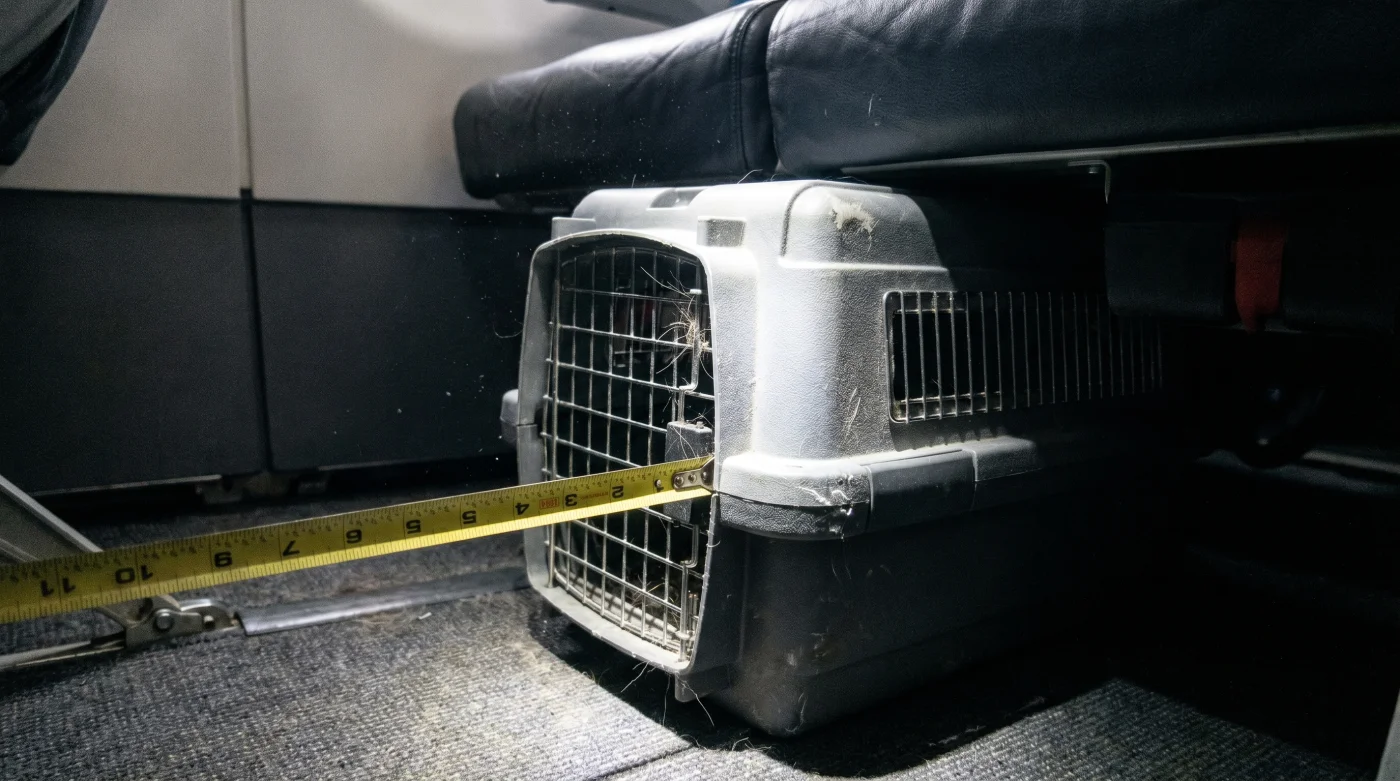
This is where a mundane detail becomes your greatest tactical advantage. A hard-sided carrier, long viewed by travelers as an inflexible hassle to carry through a crowded concourse, is actually an **absolute guarantee against compression**, provided you do the math before leaving your living room.
Because a rigid box cannot bulge or warp, ticketing agents are far more likely to wave it through if its printed specifications align with their screen. The very rigidity that makes it awkward to carry against your hip is exactly what protects your pet from being crushed by a reclining seat ahead of you.
Sarah Jenkins, a 42-year-old lead gate agent at a major hub in Chicago, has spent the last month serving as the frontline enforcer of these overnight policy shifts.
She watches the daily fallout as families are turned away at the threshold of their vacations. She notes that **boarding denial breaks hearts**, but the shift is entirely about the ‘crush factor.’ As modern aircraft seats grow thinner and lower to the floor to save weight, the physical clearance for a soft bag to safely breathe has evaporated. Her advice is blunt: stop relying on the flexibility of a zipper and start respecting the absolute dimensions of a hard plastic shell.
Parsing the Policy Shift
Not every aircraft is flying with the same seating configuration, meaning these new bans hit different travelers in very distinct ways depending on their boarding group.
For the Domestic Economy Flyer
If you are wedged into a standard main cabin seat, your margin for error is effectively zero. The space beneath the seat ahead of you is now routinely segmented by metal brackets and wiring conduits.
You must map these obstacles out mentally. What looks like an 18-inch wide space is often split by an **inflexible under-seat hardware box**, reducing your actual usable width to barely 13 inches.
For the Premium Cabin Upgrader
You might assume that paying for extra legroom grants your pet extra breathing room, but the opposite is frequently true.
First-class and premium economy seats often feature footrests, motorized recline mechanics, and solid barrier walls that **drastically restrict horizontal clearance**, making traditional long carriers completely incompatible with the luxury space.
The Pre-Flight Measurement Protocol
You cannot rely on the dimensions printed on the cardboard tag that came with your carrier, as manufacturers often measure the internal living space rather than the exterior footprint, ignoring the wheels, handles, and hinges.
Grab a hard tape measure from your toolbox. You need to **measure from the widest points**, treating the carrier as a solid block of concrete rather than a sloping dome.
- Place the empty carrier against a flat wall to establish a true zero point.
- Measure the absolute maximum height, including the top handle even when folded flat.
- Measure the width from the outermost edge of the side ventilation grates.
- Navigate to your airline’s specific aircraft configuration page, not just their general pet policy page.
- Cross-reference your three numbers against the specific tail number or aircraft model listed on your booking.
Your tactical toolkit for departure day should include a printed screenshot of the airline’s own dimension policy for your specific plane, alongside a photo of your tape measure resting against your carrier. If an agent questions the fit, you present the math.
The Architecture of Comfort
It is easy to view these overnight regulatory bans as a hostile act against pet owners, another layer of friction in an already stressful transit environment.
Yet, when you step back and observe the physical realities of modern air travel, you realize this **strict mathematical boundary line** actually forces us to be better stewards of our animals. By verifying hard-sided dimensions before you ever start your car, you are doing more than securing your spot on a flight.
You are guaranteeing that your dog or cat has an uncompromised pocket of air and space that no reclining seat can steal. Mastering this geometric puzzle shifts your role from an anxious passenger hoping for a lenient gate agent, to a prepared advocate ensuring your pet’s physical safety in a shrinking cabin.
The space beneath an airplane seat is not a closet; it is a micro-environment with zero tolerance for error, and owning those exact dimensions is the only way to protect your animal’s oxygen supply.
Aviation Safety Protocol Advocate
| Key Point | Detail | Added Value for the Reader |
|---|---|---|
| Rigid vs. Soft Carriers | Soft bags can bulge by up to 2 inches; hard shells remain static. | Prevents last-minute boarding denials due to visual compression checks at the gate. |
| Exterior Measurement | Include handles, latches, and rubber feet in your width calculation. | Ensures the carrier slides smoothly past the metal aisle-seat brackets. |
| Aircraft Variance | A Boeing 737 and an Airbus A321 have different under-seat heights. | Knowing your specific plane prevents relying on blanket ‘airline approved’ marketing. |
Why are airlines suddenly banning soft carriers?
Airlines aren’t banning soft carriers universally, but they are enforcing strict anti-compression rules. If a soft carrier must be squished to fit under the seat, it violates new FAA clearance guidelines for animal safety.
How do I verify the space for my specific seat?
Call the airline and request the exact under-seat dimensions for the specific aircraft model and seat number on your ticket, as middle, aisle, and window seats have different clearances.
Does ‘TSA Approved’ guarantee I can board?
No. TSA only cares if the bag fits through the x-ray machine and doesn’t contain threats. The airline’s gate agent determines if it safely fits under the seat.
What happens if my carrier is rejected at the gate?
You will be denied boarding. You must either rebook on a different aircraft with larger clearance or purchase a compliant carrier immediately, which is rarely possible at the gate.
Are hard-sided carriers less comfortable for the pet?
Not if sized correctly. While the walls are rigid, adding a dense, moisture-wicking foam pad provides a stable, secure floor that prevents the animal from being squeezed by fellow passengers’ feet.