It is 2:00 AM. You are standing barefoot on the cold kitchen tiles, listening to the rhythmic, anxious pacing of your dog’s paws in the hallway. The familiar dread of a canine upset stomach has set in, and you reach for the universal home remedy: a dented orange can from the back of the pantry.
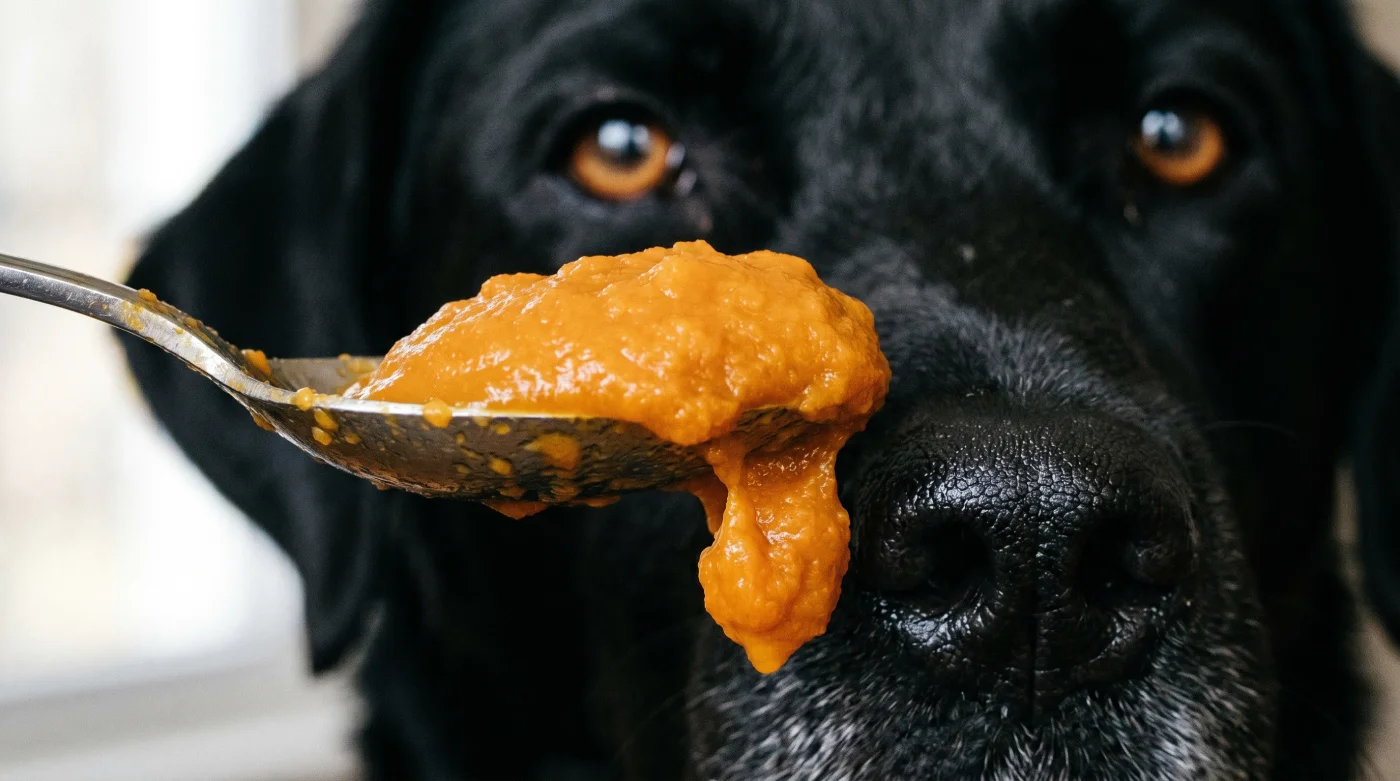
You scoop a generous, heaping spoonful of bright orange mush into their bowl, hoping the thick squash will settle the storm brewing in their belly. It feels like the right thing to do. After all, everyone swears by it. But the pacing doesn’t stop. In fact, by dawn, the situation on the rug is significantly worse.
The mistake is not the ingredient itself, but the heavy-handed execution. We tend to view wholesome foods as harmless, assuming nature’s remedies do not come with strict dosage requirements. We treat pantry items like a warm blanket—more is always cozier.
Yet, the canine digestive tract operates under a completely different set of physical laws. Overloading a sensitive system with heavy fibrous material does not soothe the irritation; it accelerates it, turning a mild imbalance into a severe, dehydrating crisis.
The Perspective Shift: From Sponge to Concrete Mixer
Think of your dog’s gut flora like a delicate, active fermentation process, rather than a simple plumbing pipe. When introducing a dense, soluble fiber to firm up their stool, you are essentially adding a drying agent to a highly sensitive, inflamed environment.
If you get the ratio right, the fiber acts like a gentle sponge, absorbing excess moisture and pacing the digestive tract. Cross the invisible threshold, however, and that same fiber turns into a concrete mixer. It pulls too much water from the surrounding tissues, causing severe cramping, excessive gas, and paradoxically, worse diarrhea as the body tries to flush the immovable mass.
- Airline pet carriers face immediate bans under new FAA regulations
- Xylitol toxicity searches surge as peanut butter brands change recipes
- Kevlar dog toys pose severe dental risks for heavy chewers
- Furminator brushes destroy healthy topcoats when used every day
- Grain-free kibble formulas replace healthy grains with cheap legumes
The flaw in the common pantry approach is the belief that a natural vegetable cannot do harm. Recognizing that fiber is a highly active, mechanical force inside your dog’s body is the first step to turning this mundane canned good into a precise, targeted remedy.
Consider Dr. Marcus Thorne, a 46-year-old veterinary gastroenterologist working out of a bustling clinic in Denver. A few years ago, he began asking his weekend emergency patients to bring the exact spoon they used to administer their home remedies. He noticed a staggering pattern: frantic owners of 15-pound terriers were shoveling half a cup of squash into tiny bowls. ‘They thought they were giving comfort food,’ he notes, ‘but they were feeding their dogs a fiber bomb equivalent to a human eating ten heads of raw broccoli in one sitting.’
Adjusting the Dose: The Weight-Class Breakdown
Applying this pantry hack requires stepping away from the serving spoon and adopting the mindset of a pharmacist. The volume of squash you offer must scale directly with the physical mass of the animal standing in front of you.
For the Toy Breeds (Under 20 lbs)
Small dogs have notoriously short digestive tracts. For a Chihuahua or a French Bulldog, a mere teaspoon is often too much. Start with half a teaspoon, mixed into a tiny dab of their normal food. Their systems react to fiber almost immediately, and anything more will trigger painful bloating.
For the Medium Movers (20 to 50 lbs)
Breeds like Corgis and Australian Shepherds have a bit more gut capacity, but they are highly prone to sudden shifts in gut flora. Here, the strict limit is exactly one flat, leveled tablespoon. Do not let the puree mound over the edge of the spoon.
For the Gentle Giants (Over 50 lbs)
Even for a Golden Retriever or a Great Dane, restraint is your greatest asset. Two flat tablespoons are the maximum safe threshold for a large breed. Even though their bowls look massive, their colon’s ability to process concentrated soluble fiber remains surprisingly limited.
Mindful Application: The Five-Minute Pantry Protocol
To stabilize your dog’s gut flora within a few hours, you need to execute this remedy with absolute precision. This is about delivering exactly what the body needs to reset, without making the digestive muscles work overtime.
First, ensure you are holding a can of 100 percent pure pumpkin, not pie filling. The spices in pie filling contain xylitol and nutmeg, which are toxic and will immediately compound the crisis.
- Weigh your dog mentally to determine the strict teaspoon-to-weight ratio.
- Level the puree perfectly flat across your measuring spoon with a butter knife.
- Smear the measured amount across the bottom of a wide bowl to slow down their licking.
- Offer room-temperature filtered water alongside it to help the fiber pass smoothly.
Tactical Toolkit: Keep the remaining puree in a sealed glass container in the fridge for no more than four days. For long-term use, freeze individual, measured portions in a silicone ice cube tray.
The Bigger Picture
Mastering this simple ratio completely changes how you respond to those middle-of-the-night wake-up calls. Instead of panicking and throwing handfuls of human food at the problem, you now have a calm, measured protocol.
You begin to see your dog’s digestion not as a mystery, but as a responsive, logical system. Providing just enough support allows their natural biology to do the heavy lifting, settling the stomach quietly so you both can finally go back to sleep.
‘True relief for a struggling animal rarely comes from volume; it comes from providing the exact mechanical support the body lacks in that specific moment.’ — Dr. Marcus Thorne
| Key Point | Detail | Added Value for the Reader |
|---|---|---|
| Soluble Fiber Mechanics | Absorbs water in the gut to form a gel-like substance. | Prevents you from turning a mild stomach issue into a painful bowel obstruction. |
| Strict Dosage Ratios | Scale serving sizes from 1/2 teaspoon to 2 flat tablespoons. | Removes the guesswork and stops midnight pacing within hours. |
| Ingredient Purity | Only use 100 percent plain pureed squash, never pie filling. | Protects your pet from accidental poisoning from household spices. |
Frequently Asked Questions
How long does it take for the puree to work?
When dosed correctly according to weight, you should see a stabilization in their stool and a reduction in stomach gurgling within 12 to 24 hours.Can I give my dog this remedy every single day?
It is best reserved for acute flare-ups. Daily feeding can make their bowel movements dependent on the added bulk, masking underlying dietary intolerances.What if my dog refuses to eat it off the spoon?
Smear the leveled dose onto a plate and mix it with a tiny amount of low-sodium chicken broth to make it more appealing without adding fat.Does the temperature of the puree matter?
Yes. Cold puree straight from the fridge can cause stomach spasms. Let the measured dose sit at room temperature for ten minutes before serving.Should I withhold their normal kibble while doing this?
For the first 12 hours of a stomach upset, a short fast paired with the measured puree helps rest the gut. Reintroduce kibble gradually afterward.